This article contains affiliate links. We may earn a commission at no extra cost to you if you make a purchase through our links.
Introduction
Small kitchens demand intelligent storage solutions, and cookware organization is often overlooked until you’re struggling to find counter or cabinet space. Pots and pans can quickly become an unmanageable clutter if not properly stored. A well-designed organizer solves this problem by maximizing vertical or underutilized spaces while keeping your most-used cookware easily accessible.
Choosing the right pot and pan organizer depends on your kitchen’s layout, your cooking habits, and your lifestyle. Not every solution works for every kitchen. Some prefer wall-mounted racks that save cabinet space, while others benefit from under-cabinet organizers or drawer systems that keep cookware hidden from view.
This guide walks you through the essential factors to evaluate before purchasing a pot and pan organizer, helping you make a choice that truly fits your small kitchen.
Space Assessment and Measurements
Before shopping for any organizer, you need to understand what space you actually have available. Small kitchens have multiple options: above stoves, on empty wall sections, inside cabinet doors, underneath sinks, or even inside deep drawers. Each option has different space constraints.
Measure the width, height, and depth of your intended installation area. Standard wall space above stoves typically measures 24-48 inches wide, but your actual available space might be narrower due to backsplashes or windows. Under-cabinet installations require knowing your clearance height—many small kitchens have only 12-18 inches of vertical space between countertops and cabinets above.
Document how many pots and pans you actually own. Most home cooks use 4-8 pots and pans regularly. If you own more than 12, a single organizer may not suffice, or you’ll need to assess which items truly need everyday access versus those stored elsewhere.
Material Quality and Weight Capacity
The material of your organizer directly impacts durability and weight capacity. Most quality organizers use steel, aluminum, or reinforced wood. Steel organizers typically support 30-50 pounds, while aluminum versions handle 20-35 pounds depending on construction.
Consider the weight of your cookware. A typical 12-inch stainless steel pan weighs 4-6 pounds. If you own cast iron, individual pieces can weigh 8-15 pounds. An organizer holding 6 cast iron pieces could need a capacity of 50+ pounds. Verify the manufacturer’s weight specifications match your cookware collection.
Also consider durability. Powder-coated steel resists rust and scratches better than bare metal. If you’re installing in humid environments like near stoves or windows, rust resistance becomes critical. Look for products with protective finishes designed for kitchen environments.
Installation Method and Stability
Your installation method significantly affects both the organizer’s stability and whether you can use your space without permanent modifications. Wall-mounted options require drilling into studs or using heavy-duty anchors. Proper installation into studs supports 50+ pounds; drywall anchors alone are suitable only for lighter loads under 15 pounds.
Under-cabinet organizers mount inside or under existing cabinets using adhesive strips, clamps, or screws. Adhesive-mounted options avoid drilling but work best on clean, flat surfaces and may fail if exposed to steam or heat. Clamp-based systems work on most cabinet edges but must accommodate your specific cabinet thickness, typically 0.75 inches.
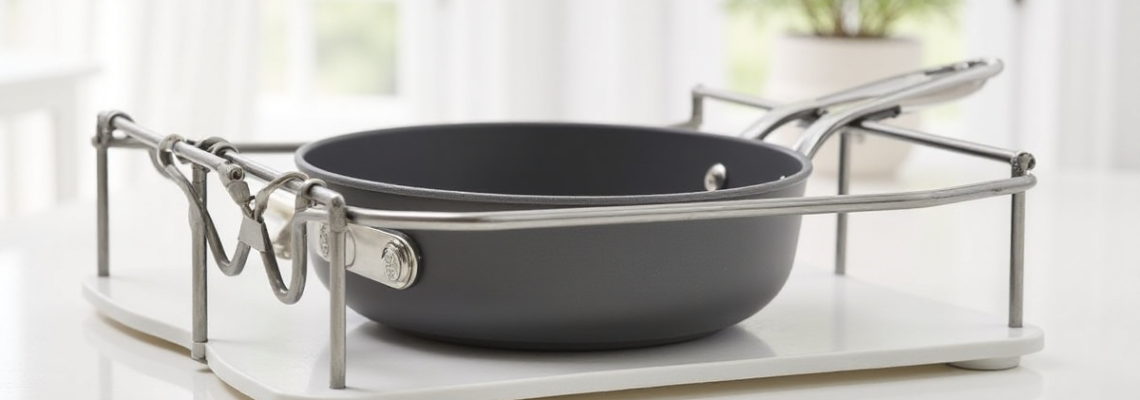
Over-the-door organizers require minimal installation but reduce the clearance of that door opening by 1-3 inches. Ensure you have adequate space for the organizer and the door to open fully. Freestanding options require only floor space and no installation, making them ideal for renters, though they consume valuable kitchen real estate.
Accessibility and Organization Style
Different organizers suit different cooking styles. Hanging racks display cookware, keeping items visible but potentially exposing dust. If you cook frequently and need fast access to multiple pans, visibility is valuable. If you prefer a clean, minimalist look, enclosed cabinets or drawers hide cookware while keeping it organized.
Tiered systems or hanging racks with multiple levels maximize visibility and accessibility for 4-10 pans. However, these designs require pulling pans straight out, which can be awkward in tight spaces. Vertical slots or dividers work well for storing pans flat, requiring only 6-8 inches of depth but more height. Some designs combine hooks for hanging lids separately, which can improve organization and accessibility.
Consider your reach and comfort. In small kitchens, reaching above eye level or bending below counter height for daily-use cookware becomes tiring. Position your organizer where you naturally store and retrieve pans—typically between your waist and shoulder height.
Flexibility and Future Changes
Small kitchens evolve as cooking habits and kitchen layouts change. A rigid organizer might work perfectly today but limit your options later. Modular systems with adjustable shelf heights, removable components, or expandable designs adapt as your cookware collection changes.
Some organizers allow you to add additional racks or sections if needed. Others are fixed in configuration. If you think you might acquire more cookware or change your cooking style, look for products designed with future expansion in mind. Alternatively, if you’re confident about your current setup, a specialized fixed design might offer better stability and lower cost.
Hardware integration also matters. If the organizer uses standard hooks or rods, you can often swap components or add additional storage as needed. Proprietary designs lock you into the original configuration but often maximize space efficiency.
Cost Considerations and Value
Quality pot and pan organizers range from $20 for simple adhesive hooks to $200+ for premium wall-mounted systems. Price doesn’t always correlate with value for your specific needs. A $30 wall-mounted option might suit your small kitchen perfectly, while a $150 custom system wastes money if it doesn’t match your space or cooking habits.
Consider cost per item of cookware stored. If your organizer costs $60 and holds 8 pans, that’s $7.50 per pan. If a $120 system holds 12 pans, that’s $10 per pan. The more expensive option may offer better materials, stability, or aesthetics, but the basic calculation helps you compare value objectively.
Factor installation costs too. DIY installation is free if you’re comfortable drilling into walls. Professional installation, needed for some systems, adds $50-150. This cost might be necessary if you rent and can’t install permanently, or if you lack the tools and skills for precise installation.
Common Mistakes to Avoid
Overestimating capacity while underestimating weight is a frequent error. A system rated for 8 pans might struggle under the weight of those pans, especially cast iron. Always verify that weight capacity matches your specific cookware collection, not just the number of pieces.
Installing in the wrong location wastes money and frustration. Mounting a wall-mounted organizer in a humid area directly above your stove exposes it to constant moisture and heat, degrading the finish and potentially loosening fasteners. Similarly, placing organizers where you must reach awkwardly defeats the purpose of having accessible cookware.
Ignoring future flexibility leaves you stuck if your needs change. Buying a very specialized organizer designed for exactly 4 pans means purchasing a new system if you acquire a fifth pan or change cooking styles. Prioritize slightly more flexibility than you currently need.
Neglecting the installation surface leads to failure. Stud-finding and proper anchoring prevent expensive systems from crashing down. Wall cavities, plumbing, or electrical lines might occupy your intended installation location. Thoroughly inspect before drilling.
Conclusion
Selecting the right pot and pan organizer for a small kitchen balances space constraints, your cooking habits, installation options, and budget. Start by assessing your available space, weighing your cookware collection, and identifying which items need daily access. Choose a material and installation method that matches both your kitchen’s conditions and your commitment level—renters need different solutions than homeowners.
Your ideal organizer should be stable enough for your cookware’s weight, accessible enough for your cooking workflow, and installed in a location that makes sense for your daily routine. The most expensive system fails if it doesn’t fit your actual needs, while a modest solution succeeds when it matches your kitchen perfectly.