This article contains affiliate links. We may earn a commission at no extra cost to you if you make a purchase through our links.
Introduction
Upgrading your apartment kitchen with an induction cooktop offers a significant improvement in cooking speed, safety, and energy efficiency compared to traditional electric coils or gas. The right model can transform your cooking experience, but the wrong choice can lead to frustration with incompatible cookware or insufficient power. For renters and condo owners, specific considerations like portability, installation limitations, and existing electrical systems are especially important.
This guide will walk you through the essential factors to consider before purchasing an induction cooktop for your apartment. We will cover critical aspects like size and portability, power requirements, burner configuration, and key safety features. By the end, you will have a clear understanding of how to select a model that fits your space, meets your cooking needs, and integrates seamlessly into your rental or owned apartment lifestyle.
🔒 Protect Your Privacy Online
Get up to 80% off NordVPN — the #1 rated VPN service
Get NordVPN Deal →Key Factors to Consider
Size, Portability, and Installation Type
The physical dimensions and installation method of your induction cooktop are the first things to evaluate. Apartments often have limited counter space, and renters may not be permitted to perform permanent installations. Your primary decision is between a built-in model, which requires cutting into a countertop, and a portable, countertop unit.
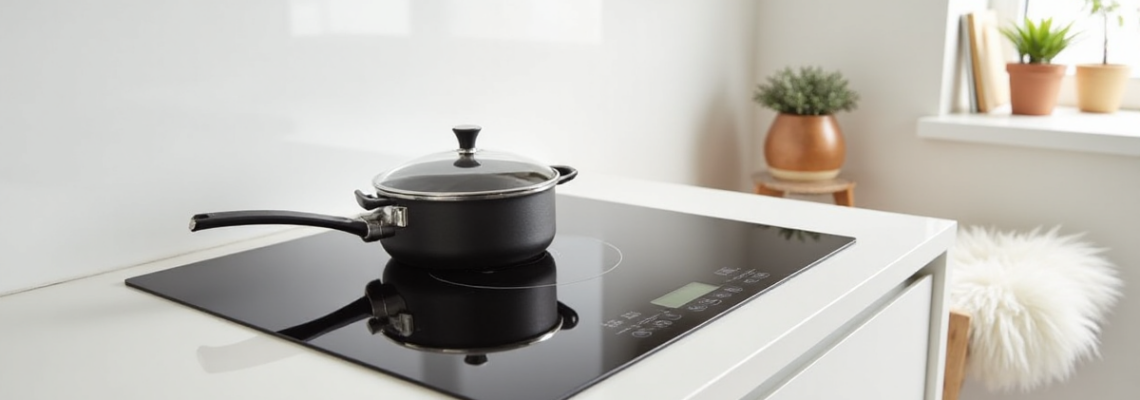
Portable, single or dual-burner units are ideal for most renters. They require no installation, can be stored when not in use, and typically plug into a standard 120-volt outlet. Look for models with a footprint around 12 to 24 inches in width. Built-in cooktops offer a sleek, integrated look but demand a dedicated space in your counter and often require a 240-volt electrical circuit, which may not be available or permissible to install in a rental.
Power Requirements and Electrical Compatibility
Induction cooktops draw significant power, and your apartment’s electrical system dictates your options. Most standard kitchen outlets in North America are 120-volt. Portable induction cooktops are designed for this voltage, but their power is often limited to around 1800 watts per burner. This is sufficient for most everyday cooking tasks like boiling water and sautéing.
Higher-powered built-in models usually require a dedicated 240-volt outlet, similar to an electric dryer. These units can deliver 3000 to 3700 watts per burner, allowing for extremely fast boiling and superior high-heat searing. Before considering a built-in model, check your apartment’s electrical panel or consult with your landlord to confirm if a 240-volt circuit is available in the kitchen. Attempting to use an adapter for a 240-volt appliance is unsafe and should never be done.
Burner Configuration and Cooking Zones
The number and flexibility of cooking zones directly impact your cooking versatility. For small households or minimalist cooks, a single-burner portable unit may be adequate. For more flexibility, a two-burner cooktop is the most popular choice for apartments, allowing you to cook a main and a side dish simultaneously.
Some models offer features that enhance the functionality of these zones. Look for units with bridge elements, which combine two zones into one long, oval-shaped area for a griddle or large roasting pan. Also, consider the size of each cooking zone. A cooktop with one large burner (8+ inches) and one smaller burner (6 inches) provides more versatility than two medium-sized burners. This allows you to efficiently use a small saucepan and a large stockpot at the same time.
Power Levels and Precision Control
A key advantage of induction cooking is precise temperature control. Unlike gas, which offers visual flame adjustment, induction relies on power level settings. A wider range of power levels gives you finer control over your cooking. Look for a model that offers at least 10 distinct power settings. Many high-end models offer 20 or more levels, which is particularly useful for delicate tasks like melting chocolate or keeping sauces at a bare simmer.
Another important feature is a powerful boost function. This setting temporarily maximizes the power to a single burner, often for a limited time (e.g., 10 minutes), to bring water to a boil remarkably quickly. For a standard 1800-watt portable unit, a boost function might increase power to 2000 watts. For a 240-volt built-in model, boost can push a burner to over 3700 watts. This feature can significantly speed up meal preparation.
Safety and Automatic Features
Induction is inherently safer than gas or electric coils because the cooktop surface itself doesn’t get hot; only the pan does. However, residual heat from the pan can warm the glass surface. Essential safety features include an automatic shut-off timer and pan detection. The cooktop should automatically turn off if no pan is detected on the burner or after a predetermined period, which is crucial for preventing accidents if the unit is accidentally left on.
Many models include a child safety lock, which disables the control panel to prevent unintended activation. Some also feature an overflow shutdown sensor that will turn off the burner if it detects boiling-over liquids. For households with children or for cooks who are frequently distracted, these features provide valuable peace of mind.
Ease of Cleaning and Control Interface
A smooth, seamless glass surface makes cleaning an induction cooktop straightforward. Since food doesn’t burn onto the surface as easily as on coils, a simple wipe with a damp cloth is often sufficient. The control interface, however, varies and can impact usability. There are two main types: tactile push-buttons and touch-sensitive sliders.
Touch-sliders offer a sleek, easy-to-clean surface but can be less responsive with wet fingers. Push-button controls provide more tactile feedback and can be easier to use precisely. Some models feature a lock function for the controls to prevent accidental changes during cooking. Consider which interface feels more intuitive for you, as you will interact with it every time you cook.
Common Mistakes to Avoid
Overlooking cookware compatibility is a frequent error. Induction cooking only works with magnetic-based cookware. If a magnet sticks firmly to the bottom of your pot or pan, it will work. Not all stainless steel is magnetic, and aluminum, copper, and glass cookware are not compatible unless they have an induction-ready base.
Ignoring your apartment’s electrical capacity can lead to costly issues. Assuming you can plug a 240-volt built-in cooktop into a standard outlet is dangerous. Always verify your kitchen’s electrical supply before purchasing. For portable units, ensure the outlet is on a dedicated circuit to avoid tripping a breaker when the cooktop is on a high power setting with other appliances running.
Choosing a unit that is too large for your needs wastes counter space. A four-burner built-in cooktop may be overkill for a single person or a couple in a small apartment. A compact two-burner portable unit often provides ample cooking space while maintaining a small footprint. Measure your available counter space carefully and consider how often you actually use multiple burners simultaneously.
Focusing solely on maximum power can be a mistake. While a high-wattage burner boils water quickly, extremely high power settings can be difficult to control for gentle simmering. A model with a wide range of power levels, including very low settings, is often more versatile than one with a single high-powered burner but poor low-end control.
Conclusion
Selecting the ideal induction cooktop for your apartment involves balancing power, size, and features with the practical constraints of your living space. By carefully considering the installation type, electrical requirements, and burner configuration, you can find a model that enhances your kitchen’s functionality. Prioritizing safety features and ease of cleaning will ensure your new appliance is a joy to use for years to come. Use this guide to make an informed decision that aligns with your cooking habits and apartment lifestyle, turning your kitchen into a more efficient and enjoyable space.
Related Articles
- 7 Best Smart Locks for Historic Homes with Unique Door Designs in 2026
- 7 Best Smart Thermostats for Older Homes Without a C-Wire in 2026
- How to Choose the Right Robot Vacuum: A Complete Buyer’s Guide (2026)
🔒 Protect Your Privacy Online
Get up to 80% off NordVPN — the #1 rated VPN service
Get NordVPN Deal →🔒 Stop Reusing Passwords
NordPass generates and stores strong passwords across all your devices.
Try NordPass Free →