This article contains affiliate links. We may earn a commission at no extra cost to you if you make a purchase through our links.
Introduction
A disorganized pantry costs time, money, and peace of mind. When you can’t find what you need, you buy duplicates. When food isn’t stored properly, it spoils faster. When items are crammed together haphazardly, you lose valuable shelf space that could hold 30-40% more inventory.
This guide walks you through the essential factors to evaluate when choosing a pantry organization system. Whether you’re working with a single cabinet or a full walk-in pantry, understanding these factors will help you make decisions that fit your needs, budget, and lifestyle.
By the end, you’ll know exactly what to prioritize and what to avoid—so your pantry works for you instead of against you.
Available Space and Layout
Your available space is the foundation of any organization system. Before buying a single container, measure your pantry dimensions (width, depth, height) and note any obstacles like electrical outlets, pipes, or uneven walls. This determines what systems will physically work.
Pantries typically fall into three categories: single cabinet (2-3 linear feet), linen closet-sized (4-6 feet), or walk-in (8+ feet). A single cabinet limits you to shelf dividers and stackable containers, while a walk-in pantry opens up options like rolling carts, freestanding shelving units, and zone-based organization. Don’t overlook shelf depth—shallow shelves (8-10 inches) require different strategies than deep shelves (14-16 inches), which accommodate 2-3 layers of items.
Consider shelf height too. Adjustable shelving gives flexibility to customize spacing as your needs change. Fixed shelving is cheaper but locks you into one configuration. If you have fixed shelves, measure the gap between each shelf (typically 10-15 inches) to ensure containers will fit properly.
Container Types and Materials
The containers you choose affect both functionality and aesthetics. There are three primary materials: plastic, glass, and stainless steel.
Plastic containers are the most affordable and lightweight, ranging from $5-30 per unit depending on size and quality. They’re durable for dry goods but less protective against moisture and odors. Look for containers labeled as “airtight” with silicone seals that create a moisture barrier. Plastic degrades under direct sunlight, so avoid placing clear containers on shelves exposed to windows.
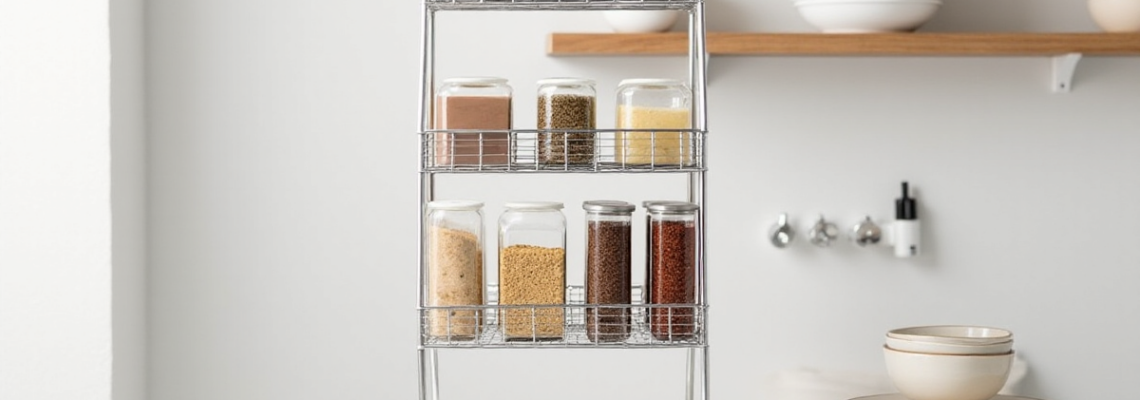
Glass containers offer superior visibility and don’t absorb odors or stains. They cost 2-3 times more than plastic ($15-50 per unit) but last indefinitely. Glass works best for frequently accessed items like flours, sugars, and baking supplies. The downsides: they’re heavier (harder to move when full) and can break if dropped.
Stainless steel containers are sleek and durable but the most expensive ($20-80 per unit). They work well for items you want to keep completely sealed from light and air, like powders or specialty ingredients. However, you lose visibility without labeling. Most pantries benefit from a mixed approach: plastic for bulk items, glass for frequently used ingredients, and stainless steel for long-term storage of specialty items.
Storage Capacity and Quantity
Calculate how much storage you actually need by auditing what you currently own. Count items by category: grains and pasta, baking supplies, snacks, canned goods, oils and condiments, and spices. Most households keep 15-25 cans of vegetables, 8-12 boxes of pasta, and 20-40 jars of spices.
Underbuying containers is a common mistake. A typical 2-3 person household needs 15-25 medium containers plus 5-8 small containers for specialty items. If you buy in bulk, add 30-50% more capacity. Wire baskets or shelf risers can increase your usable surface area by 40% without requiring additional square footage.
Consider vertical space. Stacking containers doubles your capacity, but only if they’re stable. Square containers (4-6 inch sides) stack more securely than rectangular ones. Tiered shelf organizers (risers that create a stadium-style effect) let you store 3-4 rows of containers on a single shelf instead of just one.
Accessibility and Visibility
The best organization system is one you actually use. Items should be visible at a glance and easy to grab without moving other items.
For visibility, clear containers beat opaque ones. Clear containers let you see what’s inside and know when you’re running low. If you use opaque containers, dedicate 30-45 minutes to creating labels with contents, purchase dates, and expiration information. Thermal label makers are worth the $20-40 investment if you have more than 15 containers.
For accessibility, store frequently used items at eye level (shelf height of 40-60 inches from the floor). Reserve lower shelves for heavier items like canned goods or bulk pasta. Upper shelves work for lighter, less frequently accessed items. Items you use daily should require zero moves to access them. Rolling carts ($30-100) fit into odd corners and move when needed. Pull-out sliding shelves ($15-40 per shelf) let you reach items in the back without moving forward items—increasing accessibility by roughly 30%.
Budget Considerations
Organization systems range from $50 for basic plastic containers to $500+ for built-in cabinetry. Your budget should determine scope, not compromise quality.
A minimal system (single cabinet) costs $50-150: 8-10 containers plus shelf dividers. A standard system (closet-sized pantry) runs $200-400: 20-30 containers, shelving additions, and labeling tools. A comprehensive system (walk-in pantry with custom organization) costs $500-1500+: includes pull-out shelves, drawer organizers, rolling carts, and premium containers.
The best value comes from mixing quality tiers. Invest in 3-5 premium containers for items you access weekly, and use budget containers for seasonal or backup stock. Don’t overlook the cost of labeling systems, shelving additions, and replacement containers. Reserve 15-20% of your budget for these extras. Compare per-unit cost and durability, not just total price.
Durability and Longevity
A quality system lasts 5-10 years. Poor quality fails within 1-2 years when seals degrade, containers crack, or hinges break.
For plastic containers, look for thick walls (minimum 3mm) and silicone seals (rubber degrades 2-3 times faster than silicone). Avoid thin, flimsy plastic that bends under pressure. Check reviews for specific mention of seal durability—this is the #1 failure point.
For shelving units, weight capacity matters. Standard adjustable shelves hold 100-150 pounds per shelf. If you’re storing heavy items like canned goods or grain, buy shelves rated for 150+ pounds. Shelves rated for 75 pounds or less will sag within 2-3 years under typical pantry loads. Metal components should be stainless steel or powder-coated steel, not bare metal that rusts.
Common Mistakes to Avoid
- Buying containers before measuring your space: You’ll end up with containers that don’t fit or don’t match your shelf dimensions. Measure your pantry before purchasing anything.
- Choosing only opaque containers: You’ll forget what’s inside, overbuy duplicates, and lose track of expiration dates. Use at least 50% clear containers so you can spot at a glance what’s low.
- Neglecting to account for growth: Most people underestimate how much they need and end up with a system that fills up within months. Buy 20-30% more capacity than you think you need now.
- Buying the cheapest option across the board: A $2 container with a weak seal costs more in spoiled food than a $5 container with a quality seal. Quality matters most for items you store long-term.
Frequently Asked Questions
How often should I replace containers?
Plastic containers typically last 3-5 years before seals degrade. Replace them if you notice food getting stale faster or seals no longer creating an airtight fit. Glass and stainless steel last indefinitely unless damaged. Check containers annually for cracks, warping, or worn seals.
Should I organize by meal type or by product type?
Product type (all grains together, all baking supplies together) works better than meal type for pantries. Meal-based organization requires you to know recipes, and reorganizing when you change eating habits is tedious. Product-type organization lets you see what you have, prevents duplicates, and makes shopping easier.
Can I use regular containers instead of food-storage containers?
Regular containers work temporarily, but they’re not airtight and won’t protect against insects or moisture long-term. Food-storage containers are worth the investment because they’re designed with proper seals, safe materials, and appropriate depths. Regular containers cost more overall due to food spoilage.
What’s the best way to organize spices?
Spices need both accessibility and protection from light and heat. Use small, opaque containers (2-4 inch diameter jars) stored away from direct sunlight and heat sources like ovens. Store them in a drawer or on a shelf facing inward rather than in full view. Label by name on top of the jar so you can read them without pulling bottles out.
Is it worth getting a professional organizer to design my pantry system?
Professional organizers ($100-300 per hour) make sense if your pantry is 100+ square feet or you have specific challenges like unusual shape or significant storage needs. For standard closet-sized pantries, the $200-600 cost rarely saves enough money or time to justify the expense. Use guides and online tutorials to design your own system instead.
Conclusion
Choosing the right pantry organization system boils down to understanding your space, measuring carefully, and selecting containers that match your actual needs. Start with your available space, determine realistic storage needs, and invest in quality where it matters most: seals, visibility, and accessibility. Mix container types and price points rather than standardizing everything.
The best system isn’t the most expensive or the most complex. It’s the one you’ll actually maintain because it fits your space, budget, and habits. Spend time in the planning phase, avoid common mistakes, and you’ll have a pantry that stays organized for years to come.