This article contains affiliate links. We may earn a commission at no extra cost to you if you make a purchase through our links.
Introduction
Choosing a ceiling fan for a room with a high or vaulted ceiling is a different challenge than outfitting a standard-height space. The right fan must not only complement a modern aesthetic but also perform its core function effectively from a greater distance. A fan that is too small, underpowered, or improperly installed can fail to circulate air, becoming a silent, spinning decoration.
This guide focuses on the specific considerations for modern and high-ceilinged rooms. We will examine how architectural scale, technology integration, and airflow dynamics intersect. A well-chosen smart ceiling fan enhances comfort, improves energy efficiency, and serves as a striking design element.
🛡️ Browse Safely with Surfshark
VPN + Antivirus + Ad Blocker — one subscription, total protection
Get Surfshark Deal →We will cover five critical factors: sizing and blade span, motor technology and airflow, smart home integration, lighting and design, and installation specifics for high ceilings. By understanding these elements, you can select a fan that delivers optimal performance and style for years to come.
Factor 1: Sizing and Blade Span for Scale
The scale of your room and ceiling height dictates the necessary size of your fan. A common error is installing a fan with a blade span that is too small for the space. This forces the motor to work harder to move an inadequate volume of air, resulting in poor circulation and higher energy use.
For large, open-concept rooms or great rooms with vaulted ceilings, blade spans of 60 to 72 inches are often necessary. Measure the longest wall of the room. For rooms over 18 feet in length, a 70-inch or larger fan is typically required. A fan with a 52-inch span is better suited for rooms under 15 feet. The goal is to have the fan occupy visual and functional proportion within the volume of the room.
Consider the blade pitch, which is the angle of the blades relative to horizontal. For effective air movement at height, look for a pitch of at least 12 degrees. A steeper pitch, around 14-15 degrees, allows the fan to move air more efficiently, which is crucial when the fan is mounted 10 feet or more above the floor.
Factor 2: Motor Power and Airflow Efficiency
The motor is the heart of the fan. In high-ceiling applications, a powerful, efficient motor is non-negotiable. It must generate enough torque to create a column of air that reaches the living space below. Airflow is measured in Cubic Feet per Minute (CFM).
For high or vaulted rooms, prioritize fans with a high CFM rating. Look for models that deliver at least 6,000 CFM on high speed. High-performance models in 2026 can exceed 8,000 CFM. This power ensures air is effectively pulled upward and pushed downward along the walls, creating a cooling breeze where you need it. Check the fan’s efficiency rating, measured in CFM per watt. A rating above 100 CFM/watt indicates high energy efficiency.
Direct Current (DC) motors are now standard in premium smart fans. They use up to 70% less energy than traditional AC motors and provide superior torque and speed control. They are also quieter, a significant benefit in large, often echo-prone rooms. Look for a fan with a sealed, permanently lubricated motor to ensure longevity and minimal maintenance.
Factor 3: Smart Features and Integration
A “smart” fan should offer more than just remote control. True integration into your home ecosystem provides convenience, automation, and energy savings. The core feature is Wi-Fi and/or Bluetooth connectivity, allowing control via a dedicated app and voice assistants like Amazon Alexa, Google Assistant, and Apple HomeKit.
Beyond basic on/off and speed control, look for features that leverage the fan’s position. Scheduling allows the fan to run during peak heat hours or to circulate air at night. Integration with smart thermostats enables the fan to activate automatically when a room reaches a certain temperature, reducing HVAC load. Some advanced models include occupancy sensors or can adjust speed based on ambient temperature readings.
Ensure the smart platform is reputable and likely to receive long-term support. Fans that operate on a proprietary hub system may offer more stability but less flexibility than those connecting directly to a standard home Wi-Fi network. Consider whether you want firmware update capability to add new features over time.
Factor 4: Lighting and Modern Design
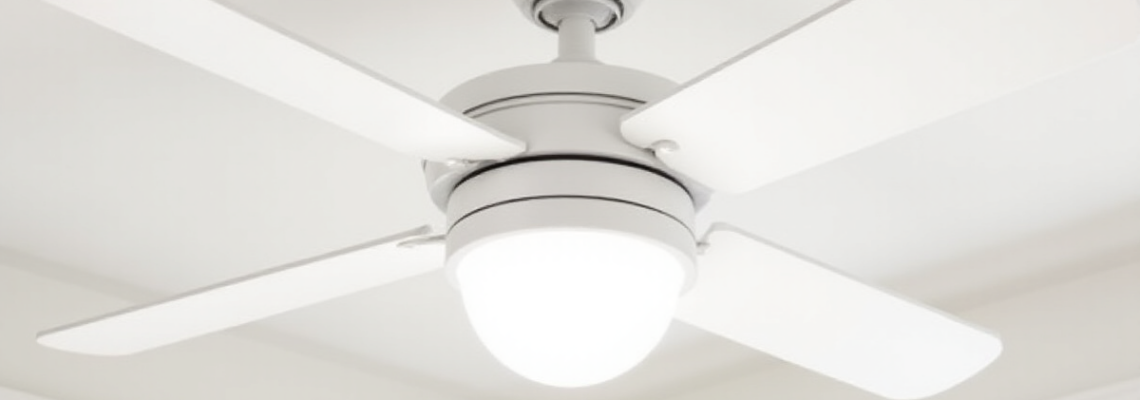
In a room with a high ceiling, the fan becomes a major focal point. Its design should align with a modern aesthetic—clean lines, matte finishes, and integrated lighting. The lighting component is particularly important as it may serve as a primary source of illumination.
Look for fans with integrated LED light kits. These provide long-lasting, energy-efficient light. Dimmability is essential, and smart models often offer color temperature tuning, allowing you to shift from warm (2700K) to cool (5000K) white light to match the time of day or activity. The total lumens output should be sufficient for the room; for a large room, aim for 3,000 to 4,000 lumens or more.
Design considerations extend to the blades. Materials like molded acrylic, laminated wood, or metal in finishes like brushed nickel, matte black, or oil-rubbed bronze are contemporary choices. The fan’s housing (motor casing) should be sleek and compact. A light kit that is fully enclosed or flush with the bottom of the motor provides a streamlined, modern look.
<
Factor 5: Downrod Length and Mounting Hardware
Installation for a high ceiling is not generic. The fan must be lowered to an optimal height, typically 8 to 9 feet above the floor, to move air effectively. This is achieved using a downrod, a metal pipe that extends from the mounting bracket to the fan body.
For ceilings between 9 and 14 feet, a standard downrod (usually 3 to 6 inches included) may suffice. For vaulted ceilings exceeding 14 feet, you will need an extended downrod, which can be 12, 24, 36 inches, or even longer. Many manufacturers sell these as separate accessories. Ensure the fan model you choose is rated for use with an extended downrod, as the longer lever arm places different stresses on the motor and mounting system.
The mounting hardware itself is critical. For high ceilings, a robust, UL-listed mounting system is mandatory. This often includes a reinforced J-hook or a heavy-duty angled mounting bracket for sloped ceilings. Never use the standard mounting kit for a ceiling over 10 feet high without verifying its safety rating for that application. Professional installation is strongly recommended for these complex setups.
Common Mistakes to Avoid
Choosing Style Over CFM: Selecting a fan based purely on its design while ignoring its airflow specifications is a common error. A beautiful fan that only moves 3,000 CFM will not cool a large, vaulted room. Always verify the CFM rating matches your room’s volume.
Underestimating Downrod Needs: Installing a fan too close to a high ceiling drastically reduces its efficiency. The air simply circulates near the ceiling, leaving the occupied space stagnant. Always use a downrod of appropriate length to position the fan 7.5 to 9 feet above the floor.
Overlooking Smart Ecosystem Compatibility: Buying a fan with proprietary smart technology that doesn’t integrate with your existing devices (like Alexa or your smart thermostat) leads to frustration. Confirm compatibility with the platforms you use daily before purchasing.
Neglecting Installation Specifications: Using inadequate mounting hardware for a heavy fan on a high, possibly sloped, ceiling is a safety hazard. Always use the manufacturer-specified mounting kit designed for high-ceiling applications and consider hiring a qualified electrician.
Frequently Asked Questions
Related Articles
- How to Choose the Right Air Purifier for Allergies and Pet Dander: A Complete Buyer’s Guide (2026)
- How to Choose the Right Induction Cooktop for an Apartment Kitchen: A Complete Buyer’s Guide (2026)
- 7 Best Smart Locks for Historic Homes with Unique Door Designs in 2026
🛡️ Browse Safely with Surfshark
VPN + Antivirus + Ad Blocker — one subscription, total protection
Get Surfshark Deal →🛡️ Total Device Protection
Surfshark Antivirus — lightweight, real-time threat detection on all devices
Get Surfshark Antivirus →