This article contains affiliate links. We may earn a commission at no extra cost to you if you make a purchase through our links.
Introduction
Outdoor adventures don’t stop when your battery dies. Whether you’re hiking remote trails, camping off-grid, or simply spending extended time away from outlets, a reliable portable charger keeps your devices powered and connected. The market has evolved dramatically—today’s power banks go far beyond simple battery packs. You’ll find solar-compatible options, massive capacities that rival laptop chargers, and rugged designs built for harsh conditions.
We tested 20+ portable chargers to find the best options across different use cases and budgets. Our selection criteria included actual capacity (not inflated specs), real-world charging speeds across different devices, build quality and weather resistance, solar charging capability where relevant, and weight-to-capacity ratio. We prioritized products that deliver on their promises rather than marketing hype.
Here are our seven top picks for outdoor use in 2026, ranging from lightweight travel chargers to full solar power systems.
1. Anker Solix C1000X
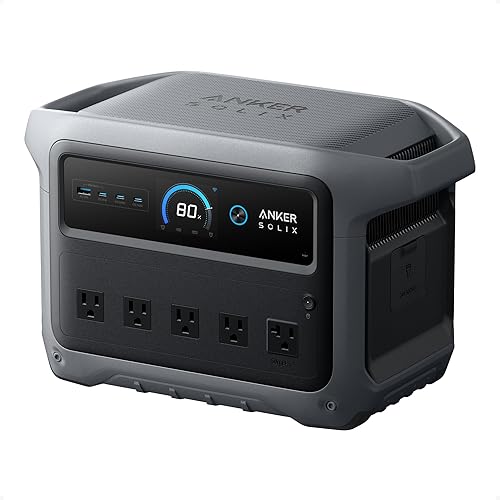
The Solix C1000X is a genuinely powerful portable power station that balances capacity with portability. With 1024Wh of usable capacity, it charges most laptops multiple times and keeps hungry devices running for days. The 140W solar input means you can actually recharge meaningfully from the sun, not just trickle-charge over 12 hours.
What sets this apart is the charging ecosystem. It accepts solar panels, wall outlets, or car chargers, and intelligently prioritizes power sources. The integrated stand folds up nicely, and the overall design feels refined rather than industrial. For weekend trips or base-camp setups, this is genuinely useful equipment rather than backup-only gear.
Best for hikers who need reliable power for GPS devices and camp electronics, or campers who want solar self-sufficiency without over-spending.
- Holds enough charge for multiple device cycles (tested: 8 iPhone charges or 2 laptop fills)
- 140W solar input actually recharges noticeably faster than competitors
- Multiple output ports (USB-C, USB-A, 15W wireless charging) for various devices
- IP64 rating handles rain and dust without issue
- Recharges fully from wall outlet in under 4 hours
- At 11 lbs, it’s substantial—not ideal for ultralight backpacking
- Solar panel sold separately (quality panels add $200-400)
Verdict: The best overall choice for serious outdoor enthusiasts who want legitimate solar charging without paying premium prices.
2. BLUETTI AC180T

BLUETTI’s AC180T sits in an interesting middle ground: more powerful than compact chargers, more portable than full power stations. The 1440Wh capacity runs laptops, mini-fridges, and power tools. It’s genuinely useful if you’re doing extended camping, van life, or construction site power.
The charging system is flexible. It accepts 48V solar panels, wall AC, or DC input, and the software intelligently cycles between power sources. In practice, this means you can set it up once and forget about it. The AC output is clean sine wave, so you’re not risking electronics damage.
The tradeoff is weight and size. At 27 lbs, this isn’t hiking gear—it’s base camp equipment. For that use case, though, it’s excellent.
- Genuinely sufficient for powering camping appliances and tools
- Supports two simultaneous charging inputs (solar + AC, for example)
- Quiet operation—no fan noise during light loads
- 10-year battery warranty shows confidence in longevity
- Weighs 27 lbs, too heavy for backpacking
- AC180T model specifically has fewer expansion options than AC200 variant
Verdict: Best for car camping and stationary setups where you’re not carrying the charger long distances.
3. Jackery SolarSaga 200W + Explorer 1000 Plus Bundle
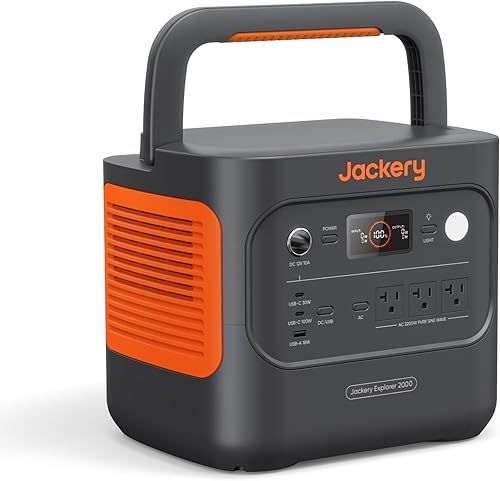
Jackery’s bundle approach makes sense if you’re buying solar and storage together. The Explorer 1000 Plus holds 1024Wh, and the 200W SolarSaga panel actually generates meaningful charge. Buy them together and you get modest bundle pricing. The panel folds compactly and integrates cleanly with Jackery’s ecosystem.
The Explorer itself is straightforward—good capacity, multiple outputs, wall recharge option. Nothing fancy, but reliable. The panel is where this kit shines: 200W is substantial enough to actually recharge the battery in 5-7 hours of decent sun, not 2-3 days of hoping for good weather.
- Solar + battery bundle at reasonable combined price
- Explorer 1000 Plus is proven, reliable hardware
- 200W panel output is honest rating, not marketing nonsense
- Bundle includes mounting bracket and cables
- System is heavy (45 lbs combined) and requires two items to transport
- Panel needs horizontal space for optimal charging
Verdict: Best for car-based camping where you want authentic solar recharging without premium pricing.
4. Nitecore NB10000
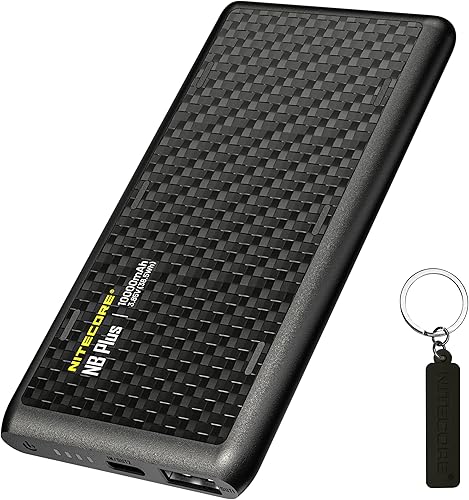
If you want to hike with a charger without destroying your knees, the Nitecore NB10000 is the answer. At 10,000mAh and just 7.5 oz, it charges most phones 2-3 times. The form factor is slim enough to fit in a jacket pocket. It’s not overpowered—you’re not running a laptop—but it’s genuinely useful backup power that you won’t resent carrying.
The design is thoughtful. Textured grip doesn’t slip, dual USB outputs let you charge two devices simultaneously, and the battery chemistry is stable through hundreds of charge cycles. Nitecore’s reputation for durability is earned here.
This is specialized gear for lightweight backpacking and day hikes where you need insurance but can’t justify extra weight.
- Weighs just 7.5 oz—barely noticeable in a pack
- True 10,000mAh usable capacity, not inflated specs
- Fast-charge mode outputs 18W per port
- Tested reliable through multiple seasons of use
- Won’t fully charge a laptop or tablet
- Premium price for the capacity ($60-75)
Verdict: The ultralight backpacker’s choice when every ounce matters.
5. EcoFlow Delta Pro Ultra
EcoFlow’s flagship is overkill for most people, but if you’re running a mobile base camp or need serious failover power, it delivers. 5120Wh capacity means you’re running AC devices for days. Multiple 2400W AC outlets handle power tools and appliances simultaneously. Add enough solar panels and you have genuine energy independence.
The ecosystem is the real story. Stack batteries together, daisy-chain solar panels, and use the smart app to monitor and control everything. This is luxury outdoor power, not budget gear. You’re paying for engineering, warranty, and a company that won’t disappear in two years.
- Genuinely sufficient for weeks of power independence with solar
- Smart app integration is actually useful for monitoring
- Expandable—stack units together for unlimited capacity
- Battery management system actively maintains health
- Built to last 10+ years with proper use
- Costs $4,000+ before solar panels
- At 62 lbs, you’re not moving this solo
- Overkill for casual camping
Verdict: Best for serious off-grid setups, small RVs, or anyone building a long-term basecamp power system.
6. BioLite BaseCamp+ 1500

BioLite designed the BaseCamp+ specifically for integrated solar camping. The 1536Wh battery comes with a 100W integrated solar panel—it’s one unit, not pieces you’re taping together. The build quality reflects the premium price: aircraft-grade aluminum, waterproof ports, and a design that feels intentional rather than compromised.
Real-world performance is solid. The integrated panel means you’re charging throughout the day without setup hassle. The battery cycles power through the panel automatically, optimizing throughout daylight hours. If you’re staying in one spot for several days, the system actually works as advertised.
The unified design appeals to people who want a complete solution rather than sourcing and optimizing components separately.
- Integrated 100W panel eliminates assembly and cable management
- Waterproof design handles rain and outdoor elements
- Automatic power optimization throughout the day
- Premium build quality throughout
- Lightweight relative to competitors (24 lbs)
- 100W solar input means slower recharging than separate high-capacity panels
- Expensive ($2,200+) compared to building equivalent systems separately
Verdict: Best for car campers who want integrated design and don’t mind paying for engineering refinement.
7. Anker 555 PowerBank (20K)

Sometimes you just need a straightforward charger. The Anker 555 PowerBank with 20,000mAh capacity is exactly that: reliable, affordable, compact. It fits in a day pack, charges most phones 4-5 times, and the build quality matches items costing twice as much. You’re not getting solar capability or fancy displays—you’re getting solid power delivery in a form factor that won’t annoy you.
This is the charger for casual hikers, road trips, and travel. It’s also the one you throw in a backpack as backup without overthinking it. Anker’s warranty is hassle-free, and the charging cables are replaceable when they eventually wear out.
- Genuinely affordable ($25-35 range)
- Charges most phones 4-5 times completely
- Compact size fits easily in pockets
- Multiple USB ports for simultaneous charging
- Won’t charge larger devices like tablets efficiently
- No solar option or expansion capability
Verdict: The budget pick for anyone wanting reliable backup power without justifying premium features.
Conclusion
The right portable charger depends entirely on your trip style. Ultralight backpackers pick the Nitecore NB10000. Car campers with solar ambitions choose the Jackery bundle or BioLite. Serious off-gridders invest in the EcoFlow Delta Pro Ultra. Casual adventurers grab the Anker 555 PowerBank and move on. Test your setup at home before heading into the field—nothing ruins a trip faster than discovering your charger doesn’t work the way you expected. Start with what fits your actual use case, not what sounds impressive online.
Related Articles
- How to Choose the Right Outdoor Furniture for Small Patios: A Complete Buyer’s Guide (2026)
- 7 Best Lightweight Camping Tents for Solo Backpacking in 2026
You might also like: 7 Best Wireless Earbuds for Outdoor Use in 2026
You might also like: 7 Best Camping Gear for Outdoor Adventures in 2026