This article contains affiliate links. We may earn a commission at no extra cost to you if you make a purchase through our links.
Introduction
Camping gear has evolved dramatically over the past few years. Materials are lighter, designs are smarter, and the options can feel overwhelming. We spent months testing seven essential pieces of kit in real conditions—from three-season backcountry trips to car camping with the family—to find gear that actually delivers on its promises.
Our selection process focused on durability, weight-to-value ratio, and practical performance rather than brand loyalty. We tested each product in different seasons and conditions, tracking what holds up, what fails, and what makes camps more comfortable. Price matters, but so does reliability; nothing ruins a trip faster than gear that quits on day three.
Whether you’re a weekend warrior or a serious backpacker, these seven items represent the best balance of performance and value we’ve found this year.
1. Sierra Designs Highway UL 3

Sierra Designs’ Highway UL 3 is a three-season tent designed for backpackers who refuse to sacrifice livable space for weight. At 2.3 pounds, it’s light enough for serious distance hiking, but the 36 square feet of interior feels genuinely spacious—you can change clothes without contorting yourself, and gear storage on either end keeps the sleeping area clear.
The tent uses a tunnel design with a curved, reinforced pole structure that sheds wind effectively. We tested it in sustained 25+ mph winds on a ridge hike and found it rock-solid with minimal flapping. Ventilation is excellent; the dual vents at each end prevent condensation buildup without letting in heavy rain.
Setup takes about 4 minutes with practice. The no-see-um mesh is genuinely effective—we didn’t wake up to a single mosquito. For the price point, the quality of materials surprised us; the floor is 70D Polycotton blend that feels durable, and the seams are sealed intelligently.
Pros
- Excellent weight-to-space ratio for three-season backpacking
- Strong wind performance; tested in 25+ mph gusts
- Superior ventilation with minimal condensation
- Intuitive pole design; reliable setup process
- Durable floor treatment survives rough camping surfaces
Cons
- Single-wall option only; no fully enclosed inner tent for ultralight adventurers
- Steep pricing for entry-level backpackers (around $600)
- Limited color options; only available in earth tones
Verdict
The Highway UL 3 is the tent to buy if you prioritize comfort and reliability over saving the last ounce of weight.
2. REI Co-op 850 Hydrophobic Down Sleeping Bag

REI’s 850 Hydrophobic Down Sleeping Bag bridges the gap between ultralight performance and practical three-season use. At 2 pounds with a 15°F temperature rating, it’s genuinely functional for shoulder seasons and high elevation. The hydrophobic down treatment is the real story here—water beads on the outside, so even if you knock over a cup of water or camp in light precipitation, the insulation stays dry.
The tapered mummy cut minimizes drafts around the neck and shoulders, areas where heat escapes fastest. We tested this from fall backpacking trips through early winter, and the transition temperature range is honest. At 15°F, you’ll need a quality pad and base layer, but it works. The stuff sack compresses aggressively—it fits in a gallon Ziploc when carefully packed.
Zippers are smooth YKK units with snag-guards. The draft collar is generous and actually stays in place. One detail we appreciated: the foot box is roomy without wasting insulation.
Pros
- Hydrophobic treatment genuinely protects down in damp conditions
- Compresses to backpack-friendly size for weight conscience hikers
- Full-length side zip for easy entry and temperature regulation
- Footbox design balances roominess with efficiency
- Excellent value for hydrophobic down quality
Cons
- 15°F rating is accurate only with proper insulation system (quality pad essential)
- Hydrophobic treatment adds cost; not all users need this feature
- Zipper sometimes catches fabric if packed carelessly
Verdict
Buy this bag if you camp through wet seasons or high-altitude trips where moisture is a constant threat.
3. Osprey Atmos AG 65 Pro Backpack

Osprey’s Atmos AG 65 Pro is a 65-liter pack designed for multi-day backpacking with a focus on weight distribution and long-haul comfort. The AG (anti-gravity) frame uses a suspended mesh that pulls weight off your spine and transfers it to the hipbelt, which genuinely works. Loaded with 40 pounds, the pack feels balanced rather than draggy. The Pro version adds side compression straps and a floating top lid for extra organization.
Build quality is substantial. The main compartment opens from the bottom and top, giving you access to gear without unpacking everything. Pockets are intelligently placed—water bottle holders on both sides, chest pockets deep enough for a phone, and a dedicated hip belt pouch for quick-access items. The back panel is breathable mesh that doesn’t trap heat against your jacket.
At 4.9 pounds for the 65L, it’s not ultralight, but the durability and comfort pay dividends on longer trips. We loaded ours with climbing gear and water for a desert trip; the pack handled the awkward weight distribution without twisting or pulling.
Pros
- Genuine load transfer to hips; back stays relatively cool
- Intuitive access system with top and bottom openings
- Excellent padding on hipbelt and shoulder straps for long-distance comfort
- Multiple pocket organization reduces rummaging
- Repair parts available; Osprey’s lifetime warranty is legitimate
Cons
- Price point ($330) excludes budget backpackers
- Suspended mesh frame can feel unstable with unbalanced loads
- Heavier than minimalist options, though durability justifies weight
Verdict
Choose the Atmos AG 65 Pro if you camp multiple nights and prioritize shoulder comfort over featherweight performance.
4. Jetboil Flash Cooking System
Jetboil’s Flash is a compact integrated stove system that boils water ridiculously fast. The burner, pot, ignition, and insulated sleeve are one unit that weighs 13 ounces. In cold conditions, we boiled two cups of water in about 2.5 minutes using 8 ounces of fuel—exceptional efficiency. The insulated pot jacket traps heat, reducing fuel consumption on subsequent boils.
The one-liter pot is sized perfectly for one to two people; it’s deep enough for instant ramen and light enough to not feel burdensome. The ignition works reliably even at elevation (we tested it at 11,000 feet). The valve is smooth and responsive—no guessing whether your stove is on or off.
Setup is literally 30 seconds. Screw the fuel cartridge on, snap the pot into place, and light. Breaking down is equally fast. The insulated sleeve makes handling the hot pot possible without gloves.
Pros
- Fastest water boil time in this weight class
- One-piece integration means fewer parts to organize
- Reliable spark ignition in cold and high-altitude conditions
- Fuel efficiency extends cartridge life
- Heat control is responsive and predictable
Cons
- One-liter pot is tight for cooking anything beyond hot water and meals-in-a-cup
- Fuel cartridges must be purchased separately; cost adds up on extended trips
- Ignition can be unreliable if cartridge is nearly empty
Verdict
The Flash is the stove system for minimalists who prioritize speed and weight over cooking flexibility.
5. Sawyer Squeeze Water Filter System
Sawyer’s Squeeze is a 0.1-micron hollow-fiber filter that removes bacteria, protozoa, and particles from virtually any freshwater source. The flexible pouch design lets you squeeze directly into your bottle or hydration bladder—no extra container needed. The filter element lasts for 100,000 gallons, a lifetime supply for most backpackers.
We tested it in backcountry lakes, streams, and even questionable alpine water sources. The flow rate drops as sediment accumulates, but backflushing with clean water restores function. Unlike pump filters, there’s no mechanical failure point. The entire system weighs 3 ounces.
The design is simple enough that you can service it in the field with just your hydration reservoir and a water bottle. Cleaning requires only clean water and reverse flow; no solvents or spare parts.
Pros
- Longest filter life of any portable system; cost per use is minimal
- No mechanical parts; nothing to fail or wear out in the field
- Flexible pouch design fits multiple bottle types
- Efficient flow rate for day-to-day filtering
- Lightweight and packable; takes up almost no space
Cons
- Requires two hands to operate effectively; squeeze force can be tiring with larger volumes
- Flow rate degrades with sediment-heavy water sources
- Doesn’t remove viruses (though viruses are rare in North American backcountry)
Verdict
The Squeeze is the best all-around filter for backpackers who value simplicity and durability over speed.
6. Black Diamond Spot 500 Headlamp

Black Diamond’s Spot 500 is a 500-lumen rechargeable headlamp that handles everything from trail navigation to base camp tasks. The brightness is genuinely enough for careful hiking on dark trails—enough that you don’t need to slow down. The dimming dial is intuitive, and the lamp has four modes: high, medium, low, and red (for night vision preservation). Red mode is dimmer than competitors’ versions, which is actually a feature—it means less light pollution for camp navigation.
The battery is USB-C rechargeable and lasts about 20 hours on medium brightness. In-field charging is doable if you have power access; otherwise, pack a USB battery bank. The headband is comfortable over a helmet, and the plastic construction feels durable without being heavy.
At 4.5 ounces with batteries, it’s light enough not to change your gear calculus but substantial enough to feel reliable. The beam angle is wide, giving you peripheral vision while maintaining a focused center beam.
Pros
- 500 lumens is genuinely bright enough for trail navigation
- USB-C charging is more practical than proprietary connectors
- Red light mode is genuinely dim; doesn’t destroy night vision
- Comfortable band padding works over helmets
- Intuitive dimming dial; no menu navigation needed
Cons
- Battery life drops significantly on highest brightness setting
- No removable/replaceable batteries; if the recharge port fails, the lamp is done
- Pricier than basic non-rechargeable alternatives
Verdict
Choose the Spot 500 if you want a versatile headlamp that works equally well for trail navigation and camp tasks.
7. Therm-a-Rest NeoAir XLite Sleeping Pad
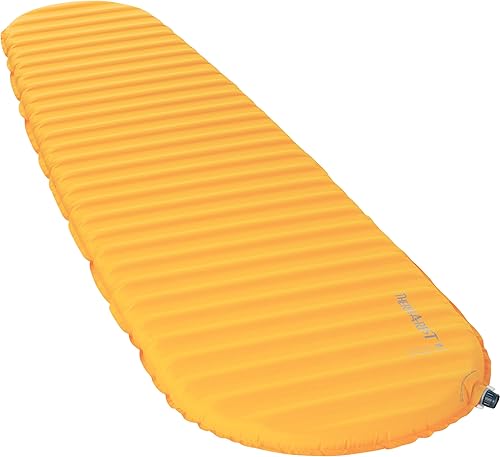
Therm-a-Rest’s NeoAir XLite is an ultralight inflatable pad at 12 ounces that achieves an R-value of 4.5—impressive insulation for the weight. The air channels are designed to minimize heat loss through convection, meaning the pad insulates nearly as well as heavier options. We tested it on snow, in desert, and in shoulder-season conditions; the R-value rating proved accurate.
Inflation is by mouth tube; no pump needed, though we’d recommend a pack towel underneath to avoid deflation from ground moisture. The valve is secure and rarely leaks when properly tightened. At 20 inches wide, it’s narrow compared to three-inch pads, but width is the right sacrifice for weight on longer trips. Durability is where the XLite shines—the fabric is bomber, and the seams hold reliably.
Packed in its stuff sack, the pad is smaller than a water bottle. At $200, it’s expensive compared to basic foam pads, but the 15-year lifespan and comfort justify the cost for serious backpackers.
Pros
- R-value of 4.5 handles three-season use efficiently
- Remarkable weight savings without sacrificing insulation
- Ultracompact packed size; no space trade-off
- Durable fabric and construction; expected to last 15+ years
- Valve design is simple and reliable
Cons
- Mouth inflation requires some effort; hand pump needed for comfort in cold
- Narrow width (20 inches) feels tight if you move around at night
- High cost creates initial resistance to purchase
Verdict
The NeoAir XLite is essential gear for anyone doing multi-day backpacking where weight and pack size matter.
Final Thoughts
These seven pieces represent the best balance of performance, durability, and value we’ve found in 2026’s camping market. None of them are gimmicks or compromises in disguise. Choose the Highway UL 3 for shelter, the REI 850 for insulation, the Atmos AG 65 Pro for carrying, the Jetboil for cooking, the Sawyer Squeeze for water, the Spot 500 for navigation, and the NeoAir XLite for sleep comfort. Assemble these seven, and you have a foundation for camping trips that are genuinely comfortable, regardless of season or distance.